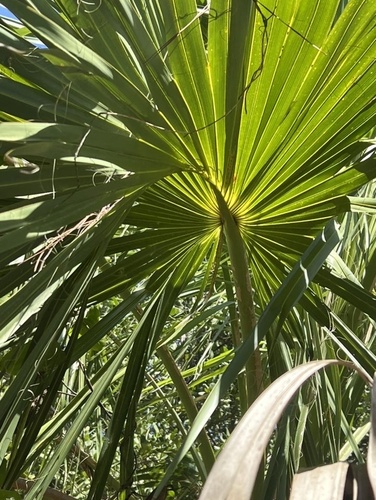
Itilizasyon Peyizaj
Etikèt Estil
Gid Kwasans pou Sid Florid
Bezwen Limyè
Bezwen Dlo
Once established (12–18 months), Cat Palm is drought-tolerant and requires minimal supplemental irrigation in South Florida.
Consistent moisture required. Water 3x per week in dry season — does not tolerate prolonged drought. Rainy season usually adequate. Excellent drainage prevents root rot.
Tè ak Fètilizasyon
Fertilizer: Palm specialty slow-release 8-2-12-4Mg. Essential for micronutrient supply in South Florida soils.
Schedule: February, May, October with palm specialty fertilizer 8-2-12-4Mg.
Tolerans Sèl
- Wotè Matire
- 4–8 ft
- Lajè Matire
- 4–8 ft
- Vitès Kwasans
- slow
- Bezwen Dlo
- 3/10
- Nòt Florida
- Florida #1
- Pri Enstalasyon
- $$
- Zòn USDA
- 10a, 10b, 11
- Estati FLEPPC
- None
- Nòt Iguàn
- 5/10
Kote pou Achte nan Sid Florid
Jwenn Cat Palm nan pepinyè Sid Florid — verifye disponiblite ak pri nan pepinyè pre ou.
Kesyon Souvan Poze
How fast does Cat Palm grow in South Florida?
Cat Palm has a slow growth rate. In South Florida's warm, humid climate it typically establishes quickly with proper watering and fertilization.
Is Cat Palm safe for pets?
Yes, Cat Palm is considered pet-safe. No significant toxicity to pets.
How much water does Cat Palm need in South Florida?
Low water needs (3/10). Once established (12–18 months), Cat Palm is drought-tolerant and requires minimal supplemental irrigation in South Florida.
Can Cat Palm tolerate salt air in South Florida?
Cat Palm has low salt tolerance (2/10) and is not recommended near areas with significant salt air exposure.
Is Cat Palm available in Miami-Dade County?
In Miami-Dade County, Cat Palm is classified as: allowed. Allowed.
Disponiblite pa Konte nan Sid Florid
Miami-Dade County
Allowed. Non-restricted.
USDA Zone 10a–11. Tropical climate, year-round warmth and humidity.
Wè Gid Konte →Broward County
Allowed. Common in Broward shaded HOA landscapes and covered entries.
USDA Zone 10a–10b. Subtropical with warm winters and wet/dry seasons.
Wè Gid Konte →Palm Beach County
Allowed. Cold sensitivity limits outdoor exposed use in northern Palm Beach County.
USDA Zone 9b–10b. Transitional zone with occasional winter cold in north.
Wè Gid Konte →Collier County
Allowed. Good choice for shaded Collier County landscape areas.
USDA Zone 10a–10b. Subtropical Gulf Coast with seasonal flooding.
Wè Gid Konte →Monroe County
Allowed. Very low salt tolerance — sheltered inland or well-protected sites only.
USDA Zone 11. Tropical maritime, highest salt exposure of all 5 counties.
Wè Gid Konte →Toujou verifye egzijans konte aktyèl anvan enstalasyon.
Ask about Cat Palm
Get answers grounded in UF/IFAS research and South Florida landscape data.