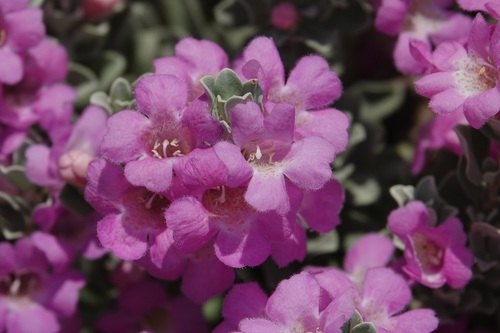
Usos en Paisajismo
Etiquetas de Estilo
Guía de Cultivo para el Sur de Florida
Requisitos de Luz
Requisitos de Agua
Once established (12–18 months), Texas Sage is drought-tolerant and requires minimal supplemental irrigation in South Florida.
VERY LOW water — desert-adapted species. 1x per week DRY SEASON MAXIMUM. Rainy season: zero supplemental irrigation. Excess moisture causes root rot and fungal problems in South Florida's humid climate.
Suelo y Fertilización
Fertilizer: None needed.
Schedule: None or minimal — desert-adapted low-nutrient species. Over-fertilizing causes lush growth that increases disease susceptibility.
Tolerancia a la Sal
- Altura Madura
- 4–8 ft
- Ancho Maduro
- 4–6 ft
- Tasa de Crecimiento
- slow-moderate
- Demanda de Agua
- 1/10
- Grado Florida
- Florida #1
- Costo Instalado
- $$
- Zonas USDA
- 7, 8, 9, 10a, 10b
- Estado FLEPPC
- None
- Calificación Iguana
- 8/10
Dónde Comprar en el Sur de Florida
Encuentre Texas Sage en viveros del Sur de Florida — consulte disponibilidad y precios en viveros cerca de usted.
Preguntas Frecuentes
How fast does Texas Sage grow in South Florida?
Texas Sage has a slow-moderate growth rate. In South Florida's warm, humid climate it typically establishes quickly with proper watering and fertilization.
Is Texas Sage safe for pets?
Yes, Texas Sage is considered pet-safe.
How much water does Texas Sage need in South Florida?
Low water needs (1/10). Once established (12–18 months), Texas Sage is drought-tolerant and requires minimal supplemental irrigation in South Florida.
Can Texas Sage tolerate salt air in South Florida?
Texas Sage has moderate salt tolerance (4/10). It can handle some coastal exposure but should be protected from direct ocean spray.
Is Texas Sage available in Miami-Dade County?
In Miami-Dade County, Texas Sage is classified as: allowed. Allowed.
Disponibilidad por Condado en el Sur de Florida
Miami-Dade County
Allowed. LIMITED PERFORMANCE WARNING: Very high failure risk in Miami-Dade's extreme summer humidity.
USDA Zone 10a–11. Tropical climate, year-round warmth and humidity.
Ver Guía del Condado →Broward County
Allowed. Humidity performance concerns in Broward — better in raised beds.
USDA Zone 10a–10b. Subtropical with warm winters and wet/dry seasons.
Ver Guía del Condado →Palm Beach County
Allowed. Better performance in Palm Beach County's lower humidity and drier winters — more viable option.
USDA Zone 9b–10b. Transitional zone with occasional winter cold in north.
Ver Guía del Condado →Collier County
Allowed. Naples area lower coastal humidity allows some success in well-drained sites.
USDA Zone 10a–10b. Subtropical Gulf Coast with seasonal flooding.
Ver Guía del Condado →Monroe County
Allowed but NOT RECOMMENDED — Florida Keys extreme humidity is incompatible with this desert plant..
USDA Zone 11. Tropical maritime, highest salt exposure of all 5 counties.
Ver Guía del Condado →Siempre verifique los requisitos actuales del condado antes de la instalación.
Ask about Texas Sage
Get answers grounded in UF/IFAS research and South Florida landscape data.